
In today’s digital-first world, diners don’t just rely on word of mouth they Google before they eat. If your restaurant isn’t showing up in local search results, you’re missing out on a ton of potential customers. That’s where Local SEO comes in. By optimizing your online presence for local searches, you can increase visibility, drive traffic, and boost revenue.
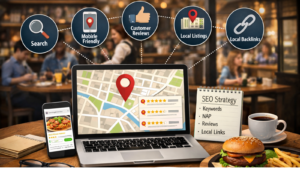
1. Optimize Your Google Business Profile (GBP)
Your Google Business Profile is the first thing people see when they search for restaurants near them. Make sure yours is:
-
Complete: Add your address, phone number, website, hours, menu, and high-quality photos.
-
Accurate: Keep your information updated, especially hours and special offerings.
-
Engaging: Encourage customers to leave reviews and respond to them promptly.
Tip: Use keywords in your business description like “Italian restaurant in [City]” to help Google match local searches.
2. Target Local Keywords
Local SEO is all about relevance and proximity. Find keywords that potential customers are searching for, such as:
-
“Best sushi near me”
-
“Pizza delivery in [City]”
-
“Romantic dinner spots [Neighborhood]”
Use these keywords naturally in your website content, menus, blog posts, and meta tags.
3. Build Local Citations
A citation is any online mention of your restaurant’s name, address, and phone number (NAP). Consistency is key:
-
Submit your restaurant to local directories like Yelp, TripAdvisor, Zomato, and OpenTable.
-
Ensure NAP details match exactly across all platforms.
Why it matters: Google uses citations to validate your business, which improves your local search ranking.
4. Leverage Reviews and Ratings
Positive reviews build trust and influence search rankings:
-
Ask happy customers to leave reviews on Google and Yelp.
-
Respond to both positive and negative reviews professionally.
-
Highlight reviews on your website and social media.
Tip: Include keywords in responses to boost SEO naturally.
5. Optimize Your Website for Local SEO
Your website should help Google understand your location and offerings:
-
Include your city and neighborhood in titles, headers, and meta descriptions.
-
Create a location page if you have multiple branches.
-
Add schema markup (LocalBusiness) to your website so search engines can easily read your info.
6. Use Content Marketing
Attract customers by sharing valuable local content:
-
Blog posts like “Top 5 Pasta Dishes in [City]” or “How We Source Local Ingredients”
-
Seasonal promotions, events, and chef specials
-
Videos and photos showcasing the ambiance and food
Tip: Content optimized with local keywords boosts both engagement and SEO.
7. Mobile Optimization
Most local searches happen on mobile devices. Ensure your website:
-
Loads quickly (<3 seconds)
-
Is mobile-friendly and responsive
-
Offers click-to-call buttons for easy reservations
8. Track and Measure Performance
Use tools like Google Analytics and Google Search Console to monitor:
-
Traffic from local searches
-
Keywords driving visits
-
Conversion actions like calls, reservations, or orders
Adjust your SEO strategy based on data, and keep testing new tactics.
Final Thoughts
Local SEO isn’t just about being found it’s about being chosen. By optimizing your Google Business Profile, targeting local keywords, encouraging reviews, and providing useful content, your restaurant can attract more customers and increase revenue. Start small, track results, and refine your approach, your next diner is searching for you online right now.