
On-Page SEO Checklist: 20 Factors Google Actually Cares About If you want your website to rank higher on Google, mastering on-page SEO is essential. While backlinks and technical SEO matter, Google pays close attention to what’s on your page itself. Here’s a comprehensive 20-point on-page SEO checklist to ensure your pages are optimized for both users and search engines.
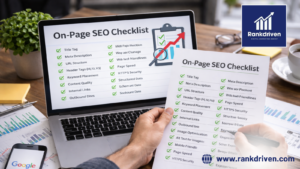
1. Title Tag OptimizationInclude your primary keyword early.Keep under 60 characters to avoid truncation.
- Make it compelling to increase click-through rates.
2. Meta Description
- Summarize content in 150–160 characters.
- Include primary and secondary keywords naturally.
- Should entice users to click without keyword stuffing.
3. Header Tags (H1, H2, H3…)
- Use H1 for the main title, H2 for subheadings.
- Incorporate keywords naturally.
- Improves readability and content structure.
4. URL Structure
- Short, descriptive, and keyword-rich.
- Use hyphens to separate words.
- Avoid unnecessary parameters.
5. Keyword PlacementPlace primary keyword in title, first 100 words, headers, and URL.
- Use LSI keywords for context.
6. Content QualityWrite original, informative, engaging content.
- Focus on user intent, not just keyword density.
7. Content Length
- Longer content often performs better (1,000–2,500 words).
- Quality > quantity; depth matters most.
8. Internal LinkingLink to relevant pages within your site.
- Helps distribute link equity and keeps users engaged.
9. External LinkingLink to authoritative sources.
- Builds trust and context for Google.
10. Image OptimizationUse descriptive file names and alt text.
- Compress images to improve page speed.
11. Mobile-Friendliness
- Ensure responsive design on all devices.
- Mobile-first indexing is standard for Google.
12. Page Load SpeedOptimize images, enable caching, and minimize scripts.
- Slow pages hurt rankings and user experience.
13. Schema Markup
- Add structured data for rich snippets (reviews, FAQs).
- Helps Google understand your content better.
14. User Engagement Signals
- Improve time on page, bounce rate, and scroll depth.
- Engaging content signals value to Google.
15. Content FreshnessUpdate content regularly with new data or insights.
- Especially important for trending topics.
16. Outbound Link Quality
- Link only to credible, high-authority websites.
- Avoid spammy or low-quality domains.
17. Keyword Density
- Maintain natural usage (~1–2% for primary keywords).
- Avoid keyword stuffing; it can hurt rankings.
18. Canonical Tags
- Prevent duplicate content issues.
- Signals Google which version is primary.
19. Social Sharing Integration
- Add share buttons to increase visibility.
- More shares = more traffic and potential backlinks.
20. Secure Website (HTTPS)Use SSL encryption for security.
- HTTPS is a ranking factor and builds trust.
Quick Tips to Implement This ChecklistAudit each page with SEO tools like SEMrush, Ahrefs, or Yoast.Prioritize user experience and content value.
- Track performance and iterate regularly.
Conclusion: On-page SEO is about creating structured, fast, and user-friendly content that signals relevance to Google. Follow this checklist to optimize your pages, improve rankings, and drive sustainable traffic.